
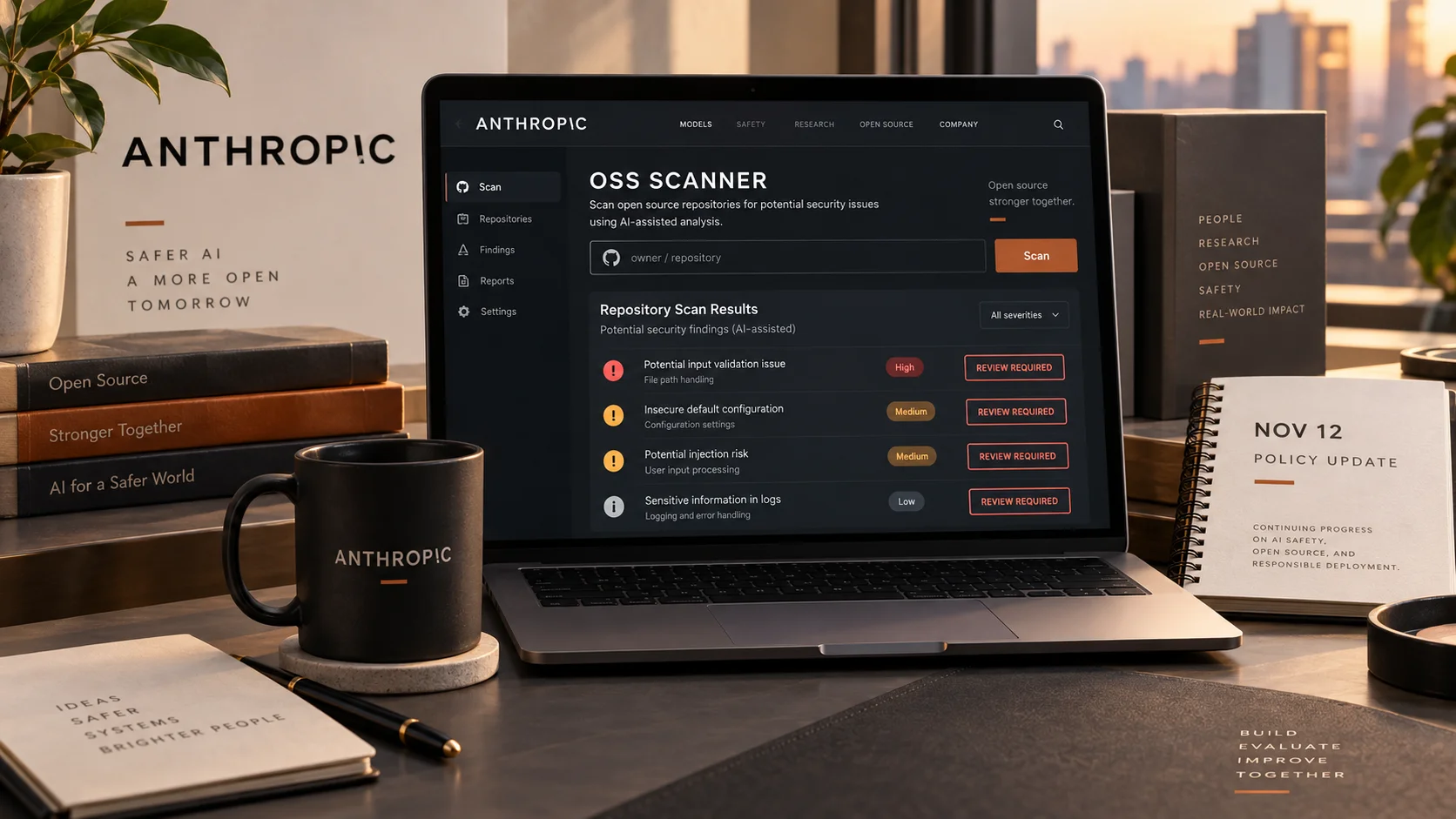
Anthropic has launched OSS Scanner, a free, opt-in vulnerability-finding service for eligible open-source projects. Separately, it announced an updated Usage Policy that takes effect on November 12, 2026, not immediately. The two announcements address different questions: finding software weaknesses and setting rules for how Claude is used.
OSS Scanner offers periodic scans using Anthropic's strongest models, including Claude Mythos. Reports can include a reproducer, an explanation and a candidate patch when available. Core maintainers can apply through the enrollment process linked from the announcement; eligibility is assessed case by case for projects with critical infrastructure or user-security impact.
The service's outputs are fully model-generated, without human review or triage. Anthropic warns that reports may be incorrect or invalid, severity may be inflated and a project's threat model may be misunderstood. Maintainers need to validate findings and test proposed fixes rather than merge them on trust.
Anthropic says its recent work found more than 29,000 candidate vulnerabilities, of which about 6,000 were manually reviewed and triaged. The larger number is not a count of confirmed flaws. Early validation and selected maintainer testimonials do not guarantee the accuracy of every future report or eliminate review work.
The separate policy announcement consolidates existing restrictions on deceptive campaigns and artificial activity, covering political and commercial misuse such as fake accounts and concealed influence operations. It says the elections section is being refocused on deception and disruption rather than a blanket ban on personalized vote and campaign targeting. Deceptive targeting and misuse of personal data remain prohibited.
For models connected to autonomous physical hardware that could cause injury, Anthropic describes requirements for a qualified operator who can observe and stop the equipment, and for equipment to hold a safe state if Claude disconnects. The post also clarifies existing high-risk requirements for qualified human review and telling affected people AI was used.
A new extreme-case prohibition addresses sustained, needless abusive or cruel treatment of models with no discernible purpose. Anthropic explicitly says it does not apply to ordinary frustration, pushback, dark creative themes or model testing and research. This is not a blanket ban on criticizing Claude.
These details come from Anthropic's announcements, not an independent scanner audit or a legal interpretation of every policy clause. Organizations should read the applicable full policy before its effective date and validate security findings against their own code and threat model.
Sources: OSS Scanner announcement, https://www.anthropic.com/research/launching-opt-in-vuln-finding-service-for-open-source; Usage Policy update, https://www.anthropic.com/news/2026-usage-policy-update.
Source & limitations
Scanner reports are unreviewed model output; candidate vulnerabilities are not confirmed flaws. Eligibility case by case. Usage Policy changes take effect November 12, 2026, not immediately; summary is not legal advice. Conceptual AI-generated editorial artwork, not an actual product interface.
Read original source