
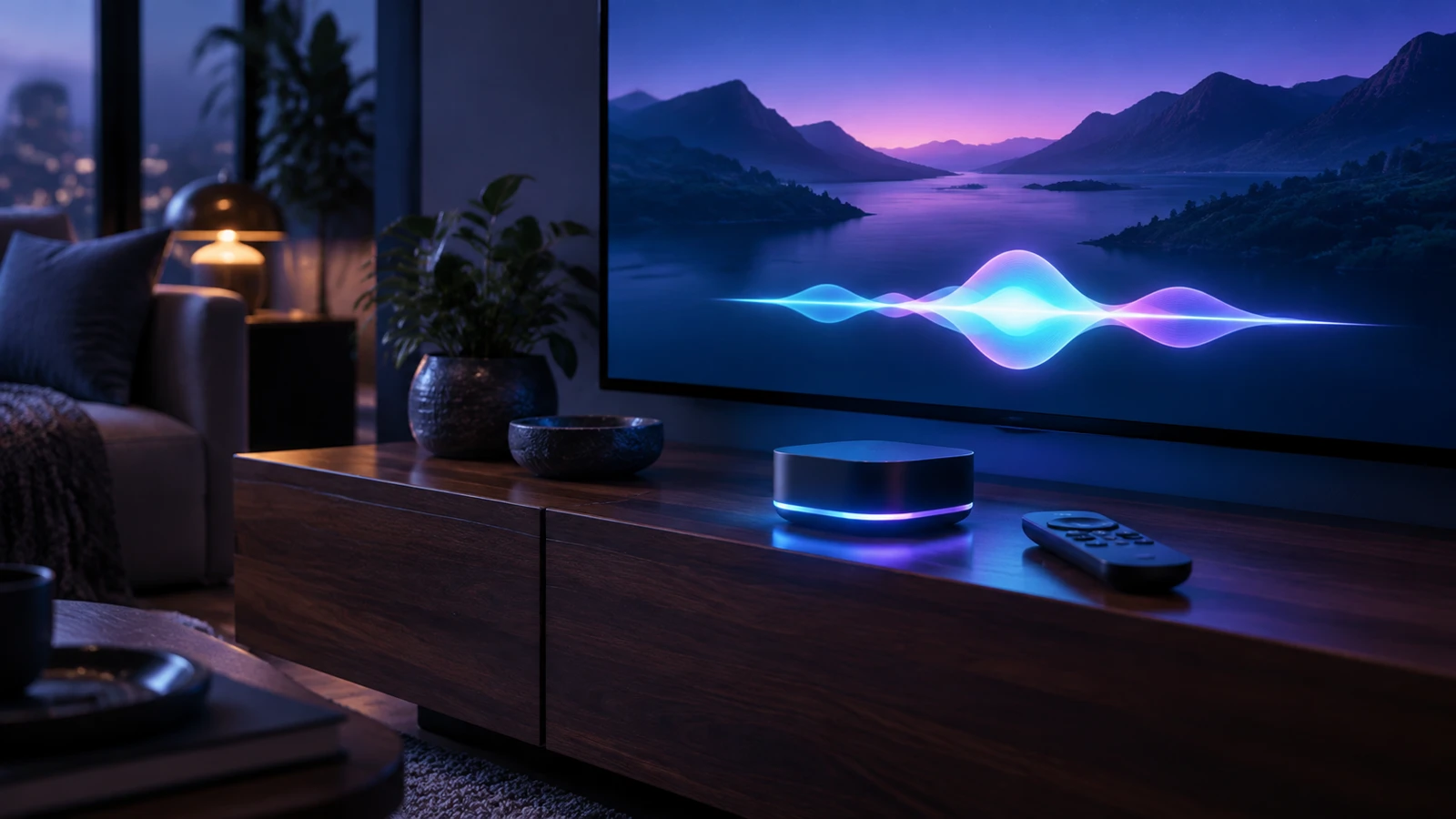
Apple announced the fourth-generation Apple TV 4K on October 13, 2026, with an A19 chip, three far-field microphones and a conversational Siri AI interface. Preorders opened that day in the United States and 29 other countries and regions, with retail availability beginning Friday, November 13. The announced $299 price is for the United States, not Indonesia.
The AI availability is narrower than the hardware announcement. Apple describes Siri AI as a beta in tvOS 27.2, available on Apple TV 4K second generation or later. It is not exclusive to the new fourth-generation device, and the release should not be treated as unrestricted general availability of the assistant.
At launch, Siri AI supports English in the United States, Australia, Canada, India, New Zealand, Singapore, South Africa and the United Kingdom. Indonesia is not in that list. A preorder announcement across multiple markets does not establish Siri AI access in every hardware market.
The home owner in the Home app must have an Apple Intelligence-enabled iPhone or iPad running the latest software, with Siri AI enabled and set to a supported language. Personal-context requests need a paired eligible device with those settings. These dependencies matter for requests that refer to a recommendation from another person or information tied to the user.
Apple describes full-screen conversational entertainment searches and follow-up questions while viewing, with compact answers over the video. It also describes smart-home accessory and scene controls. Those are company capability claims, not independently tested search accuracy, personal-context reliability or safe unattended control.
The new hardware has three far-field microphones for hands-free requests. Apple says echo cancellation isolates speech while audio plays; recognition quality was not tested here. The microphone footnote lists supported primary tvOS languages separately from Siri AI's English-only launch, so microphone language support should not be confused with conversational AI availability.
The A19 includes a dedicated AV1 decoder. Apple reports up to 50% faster CPU and up to twice the GPU performance versus the previous generation. Those are vendor comparisons, not independent benchmarks or a promised improvement for every streaming, game or AI request.
Not all Siri processing stays on the device. Apple says requests can use on-device processing or Private Cloud Compute and makes privacy claims about cloud handling and isolated microphone processing. Those statements are attributed to Apple, not an independent privacy audit. Certain server-side Apple Intelligence features have daily usage limits, with expanded access planned for a fee in the future.
Apple Intelligence-generated descriptions of HomeKit Secure Video recordings require setup with an eligible iPhone or iPad and an eligible iCloud+ subscription. Supported camera counts depend on the plan and may change. The device price does not establish unlimited AI camera summaries or include that subscription.
The four-speaker surround option requires fourth-generation Apple TV 4K and four compatible HomePod second-generation or HomePod mini 2 speakers in matching front and rear pairs, on current software. The speakers are separate purchases, not part of the $299 device price. No sound quality or room-calibration test was performed for this report.
The newest Siri Remote adds a sound-finding option and Precision Finding. The latter requires a fourth-generation remote paired with an iPhone Duo, iPhone Air, or iPhone 17 or later, excluding iPhone 17e, on current iOS; regional availability varies. Older Find My remote support is not the same as Precision Finding on any iPhone.
This is a device announcement with an AI beta and several account, device, language and subscription conditions, not a new open-weight model or buying recommendation. No preorder, installation, Siri request, visual-quality test or HomePod setup was performed here.
Source reviewed October 14, 2026: https://www.apple.com/newsroom/2026/10/apple-unveils-the-new-apple-tv-4k/ . The release and feature footnotes were used to separate hardware timing from AI availability and paid or compatibility conditions. The hero is an original conceptual illustration, not an Apple product photograph or a measured result.